What is Landscaping

Architecture and exterior design have witnessed significant advancements recently. Outdoor spaces around buildings are no longer merely neglected dirt plots; they have become essential elements that determine the quality of life and investment value of any residential or commercial project. Many villa and residential project owners in the Egyptian market often ask: What is landscaping, and how can it be utilized to transform outdoor areas into an integrated oasis combining beauty with practical functionality? Art Build offers an advanced vision for planning these spaces in line with the highest standards of quality and sustainability, where the modern concept focuses on reshaping the surrounding environment in a balanced, engineered manner that enhances mental well-being and efficiently serves daily living requirements.
What is Landscaping and What are Its Key Elements?
To answer the question in detail, landscaping is both the art and science of studying and modifying the physical features of open spaces to make them more aesthetically appealing and functionally effective. In architectural application, landscaping is divided into two primary, complementary parts: Hardscape (solid elements) and Softscape (living botanical elements). Each component requires thorough environmental and engineering studies to ensure complete harmony between the building and its outdoor surroundings. This concept includes the following key elements:
-
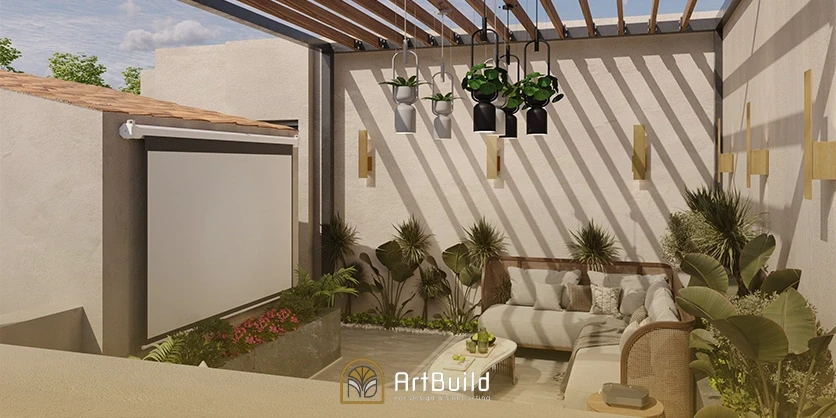
Hardscape Elements: Include walkways, wooden and metal pergolas, stone pathways, fences, waterfalls, fountains, and swimming pools. These elements provide the solid infrastructure that organizes traffic flow and defines the function of each part of the yard.
-
Softscape Elements: Include green lawns, shrubs, seasonal flowers, and living vegetation that impart a natural and vibrant character to the space, helping to purify the air and lower ambient temperatures.
-
Irrigation and Drainage Networks: Form the vital lifeline of any outdoor project, utilizing drip irrigation systems or automated sprinklers to optimize water consumption and ensure plants flourish continuously.
-
Outdoor Lighting Systems: Highlight design aesthetics at night and provide visual safety for pathways, entrances, and recreational areas.
-
Environmental and Climatic Factors: The quality of the space depends on studying sun orientation, wind direction, and soil quality, which helps in selecting suitable materials and plants tailored to the site's geography.
-
Architectural Harmony: It is essential to link the building's exterior facades with the landscape style to create a seamless visual continuity between indoors and outdoors.
Principles of Modern Landscape Design for Villas and Residential Projects
Modern landscape design relies on carefully studied engineering and aesthetic rules to ensure long-term project success and sustainability. When planning an outdoor yard, elements are not placed randomly; rather, distribution is based on calculated proportions that facilitate movement and optimize every square meter. Key design principles include:
-
Unity: Achieving cohesion among all botanical and structural elements so the yard appears as an integrated canvas harmonizing with the building's overall architecture.
-
Visual Balance: Can be symmetrical along a central axis in classic designs, or asymmetrical in modern designs to evoke freedom and vitality.
-
Scale & Proportion: Balancing the sizes of plants and structures against the building's height and overall site area to prevent any single element from overpowering the space.
-
Rhythm & Variety: Introducing thoughtful variations in color, texture, and height to eliminate monotony, while maintaining a recurring pattern that binds different sections together.
-
Focal Points: Establishing central attractions that instantly draw the eye upon entry, such as a central fountain, a mature specimen tree, or a shaded seating nook.
-
Privacy and Flow: Arranging tall trees and family seating areas to ensure privacy from neighbors, alongside safe, comfortable walkways for all age groups.
What is Hardscape and What is Its Role in Shaping the Exterior Structure?
Delving deeper into structural landscaping (Hardscape), it serves as the foundational framework ensuring the durability and stability of outdoor spaces for years to come. It focuses on the structural and mechanical works preceding and accompanying planting, creating the host environment for greenery and recreational amenities. Key hardscape elements include:
-
Pathways and Walkways: Paved using marble, interlocking pavers, or stamped concrete to facilitate movement across the garden while resisting harsh weather conditions.
-
Shading and Seating Structures: Building wooden pergolas and smart canopies that provide sun protection and comfortable gathering spaces.
-
Architectural Water Features: Installing swimming pools, artificial ponds, and wall waterfalls to add soothing sounds and cool the atmosphere.
-
Retaining Walls and Privacy Barriers: Constructing decorative boundary walls or retaining walls to protect soil and manage slopes and grading.
-
Outdoor Kitchens and BBQ Areas: Equipping dedicated outdoor cooking stations with moisture-resistant drainage, gas, and electrical connections.
-
Stormwater and Drainage Systems: Setting up robust drainage infrastructure for rainwater and excess irrigation to prevent water accumulation near building foundations.
Trees Used in Landscaping and How to Choose Them by Climate
Plants and trees serve as the natural lungs of the space. Choosing landscape trees requires rigorous environmental evaluation to ensure sustainable growth without high maintenance costs or excessive water use. Common varieties suitable for local climate conditions include:
-
Shade and Cooling Trees: Such as Ficus nitida, Poinciana, and Tecoma, which offer broad shade canopies and reduce intense solar radiation.
-
Windbreaks and Privacy Screens: Such as Casuarina, Cypress, and Conocarpus, planted along perimeter walls to block dust storms and provide acoustic and visual privacy.
-
Ornamental and Flowering Trees: Such as Jacaranda, Bauhinia (Camel's Foot), and climbing Bougainvillea, which bring visual vibrancy and attractive color gradients.
-
Palm Varieties: Such as Royal Palms, Cycads, and fruiting Date Palms, adding elegance and prestige to main entrances and axes.
-
Domestic Fruit Trees: Such as Citrus, Mulberry, and Olive trees, combining greenery with fresh, edible produce.
-
Aromatic Plants & Ground Covers: Planting Jasmine, Lavender, and Basil near outdoor seating, complemented by durable natural turf like Paspalum.
Step-by-Step Softscape Implementation in Projects
Softscaping is not merely planting trees; it is a living ecosystem that requires sequential technical preparation to ensure healthy and sustainable plant growth. Implementation follows these methodical steps:
-
Soil Analysis and Treatment: Testing salinity and soil texture, and replacing unsuitable soil with balanced layers of sand, compost, and agricultural loam.
-
Irrigation Network Installation: Laying polyethylene pipe networks and installing solenoid valves and smart-controlled sprinkler/drip systems.
-
Grading and Leveling: Adjusting landscape slopes and levels to guarantee uniform water distribution and prevent stagnant puddles.
-
Planting Large Trees: Planting main specimen trees and mature saplings with wooden stakes for wind support.
-
Laying Natural Turf: Installing rolls of natural grass over graded, compacted soil, followed immediately by regular watering.
-
Adding Rocks and Succulents: Integrating natural boulders and drought-tolerant succulents for a textured, natural finish.
Importance of Regular Maintenance for a Perfect Landscape
The property owner's relationship with the outdoor area does not end once execution is complete. A successful landscape relies on long-term sustainability and vibrancy maintained through preventative and periodic care. Key maintenance tasks include:
-
Pruning and Lawn Mowing: Trimming grass regularly and removing dead branches to stimulate fresh growth.
-
Periodic Fertilization and Pest Control: Enriching the soil with essential nutrients and applying preventative spraying programs against pests and fungi.
-
Irrigation Network Servicing: Regularly inspecting spray nozzles and drip emitters, and adjusting rain sensors according to seasons.
-
Cleaning Structural Elements: Pressure-washing stone paths, treating pergola coatings, and checking waterfall pump efficiency.
-
Electrical and Lighting Inspections: Checking outdoor cables and light fixtures to ensure complete waterproofing and safety.
-
Seasonal Plant Refreshment: Replacing winter and summer annuals on schedule to maintain vibrant colors year-round.
How to Choose the Right Style for Your Outdoor Space?
When selecting a landscape design style for your property, several global design schools can be adapted to suit modern residences. The chosen style dictates materials, plant selections, and walkway layouts:
-
Modern Style: Characterized by clean straight lines, hidden lighting, polished concrete, treated wood, and minimalist lawn areas.
-
Andalusian & Islamic Style: Centers around an internal courtyard with a marble fountain, mosaic tiles, and fragrant aromatic flora.
-
English Cottage Style: Features flowing, naturalistic layouts where multi-colored flowers line winding, irregular paths.
-
Tropical Style: Ideal for dense greenery enthusiasts, featuring broad-leaved plants, lush palms, and natural rock waterfalls.
-
Modern Xeriscaping (Desert Style): Focuses on water conservation using colored gravel, large boulders, and geometrically arranged succulents/cacti.
-
Functional Alignment: The style must cater to family needs, including children's play areas, relaxation zones, or BBQ setups.
Landscaping Costs and Factors Influencing the Budget
There is no fixed price for landscape execution, as costs vary based on design choices and site conditions according to these parameters:
-
Site Area and Topography: Total square footage and the need for earthwork, grading, or retaining walls directly affect foundational costs.
-
Hardscape to Softscape Ratio: Hardscape works (marble, pergolas, pools) typically cost significantly more than planting and softscaping.
-
Plant Types and Sourcing: Prices of mature specimen trees and imported palms vary by age and size compared to local saplings.
-
Irrigation and Smart Automation: Digital controllers increase upfront installation costs but generate long-term savings on water and maintenance.
-
Lighting and Safety Gear: High-grade waterproof fixtures and insulated cabling impact overall project durability.
-
Engineering Supervision: Partnering with a specialized company prevents costly future repairs resulting from poor waterproofing or faulty piping.
Current Market Estimate: In the Egyptian market, comprehensive villa landscaping generally ranges from 800 to 2,500 EGP per square meter, depending on finish quality and hardscape ratio, and may increase for projects featuring custom pools or advanced smart systems.
Best Practices for Water Conservation in Landscaping
Water conservation is a cornerstone of sustainable, eco-friendly landscaping. Smart irrigation methods and climate-appropriate plants create lush green spaces with minimal waste through these practical solutions:
-
Subsurface Drip Irrigation: Delivers water and nutrients directly to root zones without evaporation loss.
-
Weather and Soil Moisture Sensors: Automatically shut off irrigation during rain or when soil moisture reaches optimal levels.
-
Mulching: Covering root areas with organic mulch/wood chips to retain moisture and suppress weed growth.
-
Greywater and A/C Condensate Recycling: Reusing treated air conditioning runoff and light wastewater for irrigation.
-
Limiting High-Water Turf Areas: Replacing portions of natural lawn with stone paving or water-efficient succulents.
-
Night and Early Morning Watering: Scheduling irrigation during cooler hours reduces evaporation loss by over 40%.
Approaching landscaping as an integrated engineering and aesthetic investment adds value to your property and delivers an exceptional living experience. Art Build is dedicated to creating stunning outdoor spaces that seamlessly unite elegance with sustainability.
Landscaping is the comprehensive concept of designing and developing entire outdoor spaces, while hardscaping refers specifically to the non-living, solid structural elements, such as stone pathways, pergolas, fountains, retaining walls, and fences.
The execution time for a complete landscaping project for an average-sized residential villa typically ranges from 4 to 8 weeks, depending on the scope of structural work, irrigation systems, swimming pools, and plant availability.
Early autumn (fall) and spring are the ideal seasons for planting and landscaping, as moderate temperatures allow plants to establish strong root systems in the soil before the extreme heat of summer or the cold of winter.