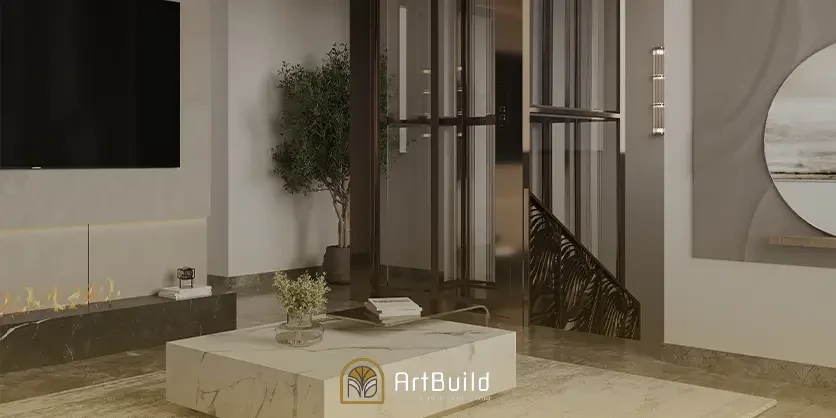
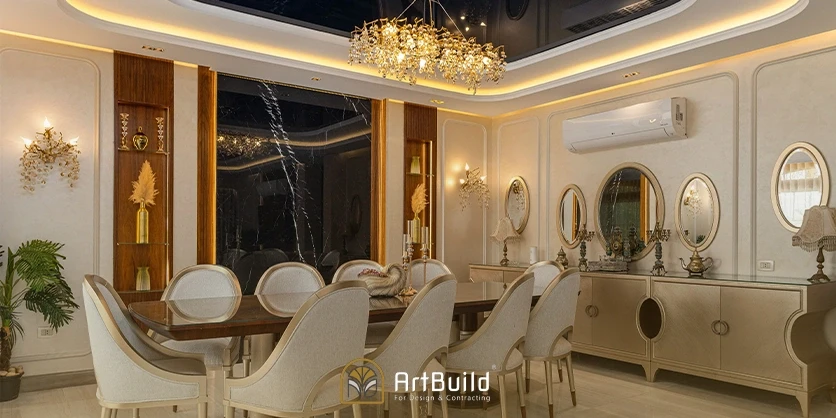
Ultra Super Lux Finishing

Ultra super-luxury finishing is an ideal choice for anyone seeking an upscale space that combines quality workmanship, harmonious design, and everyday comfort—not merely expensive decorative elements.
At Art Build, the value of finishing begins with proper planning and coordination of the engineering work before materials are purchased. Even the most beautiful flooring or expensive lighting fixture cannot compensate for an incorrect electrical layout or inadequate waterproofing.
This guide provides a clear overview of this finishing level, its specifications and implementation stages, the materials worth investing in, how to control costs, and how to inspect and accept the completed project using measurable standards.
There is no single, binding specification for the term “ultra super-luxury.” Different companies may use it to describe very different packages. You should therefore base your decision not on the label alone, but on a bill of quantities and specifications identifying the brands, material grades, installation methods, number of electrical points, paint standards, and included accessories.
This approach allows you to compare quotations on an equal basis and understand exactly what you will receive, rather than relying on attractive photographs or a general description.
What Is Ultra Super-Luxury Finishing, and What Are Its Specifications?
Ultra super-luxury finishing is an advanced level of interior finishing that combines infrastructure work completed according to engineering calculations, highly reliable materials, and details designed specifically for the space.
The real difference is not limited to marble or gypsum-board features. It can be seen in the alignment of walls, efficiency of water and electrical systems, waterproofing quality, precision of joints, lighting distribution, and ease of maintenance after occupancy.
This finishing level can be implemented in modern, classical, or neoclassical styles because the finishing standard is separate from the visual design style.
Specifications should be based on the occupants’ actual needs, including the number of residents, cooking habits, working-from-home requirements, storage needs, the presence of children or elderly residents, and privacy requirements.
The priority might be better soundproofing, easy-to-clean flooring, comfortable lighting, or corridors that allow safe movement. Translating these needs into design decisions prevents money from being spent on impressive details that are rarely used. It also connects luxury to genuine comfort that continues long after the initial photographs and visits.
Practical specifications generally include:
-
An interior design that defines circulation, furniture, colors, materials, and lighting before execution begins.
-
An electrical system calculated according to appliances and expected loads, with suitable panels, circuit breakers, and sufficient power points.
-
Plumbing completed with reliable materials, followed by pressure and waterproofing tests before floors and walls are closed.
-
Coordinated flooring materials, such as high-quality porcelain, marble, or engineered wood, selected according to each area’s use.
-
Multiple layers of paint applied after surfaces have been treated and checked for alignment and dryness.
-
Precisely manufactured woodwork, doors, and storage units with accessories capable of withstanding frequent use.
-
General, directional, and concealed lighting that gives every space a clear function and balanced visual appearance.
-
Air-conditioning, ventilation, and smart-home solutions integrated at an early stage without visible connections or future demolition.
Understanding the different types of modern finishing helps distinguish between the quality level and the design style. Modern design focuses on simple lines, while classical design relies on details and ornamentation. However, both styles can be executed at different quality levels.
Ultra super-luxury finishing differs from conventional super-luxury finishing through its higher level of customization, more precise detailing, greater system integration, and clearer testing and handover standards—not simply by using more expensive materials for every item.
Stages of Ultra Super-Luxury Finishing
The project begins with accurate site measurements and an inspection of the plasterwork, levels, and water and electrical sources. A furniture and circulation plan is then prepared.
Once the layout has been approved, detailed working drawings are produced for the electrical, plumbing, ceiling, flooring, air-conditioning, and joinery work.
These drawings prevent conflicts between different systems. The air-conditioning unit’s location affects the ceiling design, the television’s position determines the electricity and data points, and the kitchen dimensions determine the water connections and appliance locations.
The work should follow a logical sequence that protects completed items:
-
Inspection and quantity surveying: Measure the spaces and accurately identify defects and required work.
-
Design and sample approval: Finalize the color palette, materials, and dimensions before purchasing.
-
Demolition and construction: Complete architectural modifications and correct openings and floor levels.
-
Electromechanical installations: Install and test the electrical, plumbing, air-conditioning, and low-current systems.
-
Waterproofing and plastering: Test waterproofing in bathrooms, kitchens, and exposed surfaces before leveling the walls.
-
Ceilings and flooring: Install gypsum board, cornices, and flooring while controlling joints and slopes.
-
Painting and joinery: Prepare surfaces in stages before installing doors and fixed units.
-
Final finishing: Install switches, sanitary fixtures, lighting, accessories, and silicone sealants.
-
Testing and handover: Operate every system, record outstanding issues, and resolve them before delivery.
Ultra super-luxury finishing requires continuous supervision because the quality of each stage depends on the correct completion of the previous one.
Flooring should not be installed before waterproofing is tested. Ceilings should not be closed before the air-conditioning and electrical routes are photographed. Final painting should not begin while other work continues to generate dust.
It is also advisable to maintain a project file containing the approved drawings, color codes, material invoices, warranties, and photographs of concealed installations before they are covered. This file becomes an important reference for maintenance or the future addition of new appliances.
The project schedule must allow realistic periods for approvals, procurement, drying, and testing rather than merely listing a start and completion date.
Some custom-made materials require several weeks to produce, while plaster, paint, and waterproofing layers must not be rushed before they have completely dried.
A short weekly meeting helps review completed work, upcoming activities, decisions required from the owner, and any risks that may affect the deadline. This prevents workers from being delayed by an unapproved sample or an appliance whose technical dimensions were not provided on time.
Ultra Super-Luxury Materials and Finishes Worth Investing In
The best material is not always the most expensive. It is the material most suitable for the location, level of foot traffic, moisture conditions, and maintenance method.
Large-format porcelain or natural stone may be selected for entrances and living rooms, provided that the surface is level and the installation quality is high.
Engineered wood or other durable flooring may be more appropriate for bedrooms because it creates a warmer atmosphere. In bathrooms, slip resistance, ease of cleaning, and waterproofing quality should take priority over appearance alone.
When selecting essential items, consider the following:
-
Electrical work: Select wires and circuit breakers that match the expected loads, separate critical circuits, and provide carefully planned spare points.
-
Plumbing: Focus on concealed pipes, fittings, and valves because these are the most difficult and expensive items to repair.
-
Waterproofing: Perform a water test for the specified period before installing tiles, and document the result in an inspection report.
-
Flooring: Check the shade, dimensions, and batch number, and determine the installation direction and joint width in advance.
-
Painting: Treat moisture and cracks first, then specify the paint type, sheen level, and number of coats.
-
Joinery: Compare the core material, veneer, edges, and hardware—not only the appearance of the external door or panel.
-
Lighting: Review the color temperature, brightness, beam angles, and ease of maintenance and replacement.
The super-luxury apartment finishing guide explains the basic specifications that can serve as a foundation.
The ultra level adds more customized solutions, such as bespoke joinery, lighting scenes, smart controls, soundproofing, and coordinated materials throughout the rooms.
In ultra super-luxury finishing, the largest portion of the budget should be allocated to work affecting safety and service life. The remainder can then be distributed among the visible elements. Replacing a lighting fixture later is much easier than repairing a leak beneath an expensive floor.
Do not approve a material based only on a small catalog sample. Request a physical sample and examine it at the site during both daytime and nighttime because lighting changes the perceived color and texture.
If the space will be heavily used, test the material’s ease of cleaning and scratch resistance. When combining two materials, create a small mock-up showing the junction, gap, and trim that will be used.
This simple step reveals differences in thickness or color at an early stage and avoids the considerable cost of removing and reinstalling materials after they have been applied throughout the property.
Ultra Super-Luxury Finishing Costs and the Factors Affecting Them
An accurate price per square meter cannot be established without a site inspection and an up-to-date bill of quantities. Material and labor costs change, and projects begin from different conditions. An apartment delivered in a shell-and-core state is not comparable to a property with installations that can still be used.
Prices may also be calculated according to the floor area, a detailed bill of quantities, or actual costs plus management fees.
A proper comparison requires understanding the measurement method, scope of work, taxes, transportation, wastage, warranties, and whether furniture, appliances, air conditioning, and other systems are included in the proposal.
The budget is affected by:
-
The property’s area, layout, and number of bathrooms and kitchens—not only its total size.
-
The condition of the existing plasterwork and installations, and the amount of demolition or repair required.
-
The country of origin, availability, delivery time, and expected wastage rate of the materials.
-
The complexity of ceilings, wall cladding, joinery, and custom-made details.
-
The level of smart-home systems, sound systems, air conditioning, security, and lighting controls.
-
The project’s location, ease of material access, permitted working hours, and waste-management requirements.
-
The implementation period, number of work teams, level of supervision, and quality-control requirements.
The article on the finishing price per square meter in Egypt provides a framework for understanding market levels, while the luxury finishing price per square meter guide explains how materials, design, and location affect costs.
To control an ultra super-luxury finishing budget, set aside a contingency allowance, identify approved alternatives for every material, purchase long-lead items early, and avoid changing the design during implementation without first understanding the financial and scheduling consequences.
It is helpful to divide the budget into infrastructure, fixed finishes, replaceable fixtures, and management and supervision fees.
Review actual expenditure against the approved amount at the end of every stage. Do not use the contingency allowance to upgrade nonessential features before the fundamental work has been completed.
Wastage should be calculated using reasonable percentages that differ for tiles, marble, and wallpaper. A limited quantity from the same production batch should also be retained for future maintenance.
With this approach, the budget becomes a decision-making tool rather than an unexpected figure that appears close to handover.
How to Choose a Company for Luxury Finishing
Evaluate a company based on documents and work that can be physically inspected—not photographs alone.
Ask to visit a completed project or one currently under construction. Examine the accuracy of corners and joints, the way doors close, lighting distribution, silicone finishing, and floor alignment.
Ask about the team responsible for the work, who manages the site, the number of engineering visits, the sample-approval process, how concealed work is documented, and who is responsible for correcting defects or handling supplier delays.
A professional proposal should include:
-
A detailed scope of work that clearly identifies inclusions and exclusions without using vague phrases.
-
A bill of quantities listing quantities, units, brands, models, or clearly defined quality levels.
-
A project schedule linking payments to measurable completion stages rather than dates alone.
-
A written change-order procedure showing the cost and additional time before the work is completed.
-
Inspection and testing standards for electrical work, plumbing, waterproofing, flooring, and painting.
-
Clear responsibility for purchasing materials, storage, security, transportation, and waste removal.
-
A clearly defined warranty period and a process for recording and responding to issues after handover.
The apartment-finishing cost calculation guide can be used to prepare an initial budget, which can then be converted into a detailed bill of quantities following the site inspection.
When comparing two quotations, standardize the specifications first. One may appear less expensive because it excludes waterproofing, lighting fixtures, or air-conditioning work.
Art Build connects design with execution and manages the details throughout the project lifecycle, helping reduce conflicts and waste.
The success of ultra super-luxury finishing is not measured by how quickly work begins, but by the clarity of the planning, consistency of supervision, and quality of the result during actual operation.
A good company will explain the reason behind every recommendation and provide alternatives showing the effects on price and maintenance instead of always directing the client toward the most expensive choice.
Communication channels should also be clear, with significant decisions recorded in a single document accessible to the designer, engineer, and contractor.
Multiple verbal instructions given to different workers create conflicts and rework. A documented record of approvals and changes protects responsibilities, the budget, and the project schedule.
How to Inspect Ultra Super-Luxury Finishing Professionally
Handover is not a quick tour to view the colors. It is an organized inspection that begins with concealed work and ends with practical testing.
It is advisable to conduct an initial inspection and prepare a photographed snagging list. The implementation team should then be given time to resolve the issues before the final handover.
Use the drawings, bill of quantities, and approved samples as references. Do not rely on memory or verbal agreements.
The basic inspection checklist should include:
-
Operating all switches, outlets, and circuit breakers, and testing electrical loads, internet connections, and control systems.
-
Opening every faucet and drain while monitoring water pressure, leaks, drainage speed, and odors.
-
Checking the slopes of bathroom and balcony floors and ensuring water does not collect away from the drains.
-
Inspecting floor alignment, consistent joints, and the absence of hollow or broken tiles.
-
Inspecting the paintwork under daylight and side lighting to identify unevenness or color differences.
-
Testing doors, drawers, hinges, and locks to ensure that there is no friction or noise.
-
Operating the air-conditioning units, exhaust fans, concealed lighting, and integrated appliances according to their manuals.
-
Receiving warranties, paint codes, installation drawings, keys, and any agreed spare parts.
In ultra super-luxury finishing, quality is visible in the smallest details: two materials meeting without a difference in level, aligned switches, consistent marble patterns, easily accessible maintenance points, and stable lighting without flickering.
Record every defect with a precise description, location, photograph, and repair deadline. Repeat the test after the problem has been corrected.
It is preferable not to make the final payment until all agreed items and documents have been delivered, with the acceptance and warranty confirmed in writing.
After moving in, monitor the systems during the warranty period and report issues promptly, particularly leaks, tripping circuit breakers, sagging doors, or cracks in repaired surfaces.
Some minor issues may appear during use or due to temperature changes, so a follow-up inspection after an agreed period can be beneficial.
The owner should also receive instructions for cleaning sensitive surfaces, air-conditioning and filter maintenance schedules, and guidance on operating the smart-home systems.
This helps preserve the quality of the finishing and prevents materials from being damaged by unsuitable cleaning products.
Ultra super-luxury finishing creates a more comfortable and valuable home when it combines a design suited to your lifestyle, safe infrastructure, appropriate materials, and thoroughly tested workmanship.
Purchasing the most expensive elements without drawings, a bill of quantities, or proper supervision will not guarantee a luxurious result.
Art Build’s experience in design, construction, and finishing helps manage the project as one integrated system that begins with the initial concept and concludes with an organized handover.
Start with a clear vision and a realistic budget, and make every detail a carefully considered step toward a space in which you will truly enjoy living.
Yes. It can be applied to small spaces through careful circulation planning, multifunctional furniture, calm colors, and thoughtfully designed lighting. Luxury in this context is achieved through precise details and efficient use of space—not through excessive decoration or oversized features.
Not necessarily. The scope differs from one contract to another. The bill of quantities should clearly state whether appliances, air conditioning, kitchen units, fixed joinery, curtains, and furniture are included. It should also specify the brands or allocated budget for every item.
\Turnkey describes the scope of responsibility until the property is ready for use, while “ultra super-luxury” describes the standard of materials, detailing, and execution.